
Places to visit in Kayseri
Updated: 10 min read
1. Places to visit in Kayseri
Old Talas
Talas, 15 minutes from the city centre, is one of Kayseri's districts steeped in history. A mystical district at the foot of Mount Ali where civilisations meet, Talas offers its visitors a true cultural mosaic. Bearing traces of the Roman, Byzantine, Seljuk and Ottoman periods, Old Talas is like a film set, full of the work of Armenian master stonemasons, stone mosques and mosques converted from churches, many of them now turned into charming cafés. Old Talas is a visual feast in every season: as you stroll its cobbled streets at sunset, nostalgic songs drifting from the cafés will keep you company. The cafés aren't just ordinary tables and chairs. They offer laid-back settings with divans, wooden stools and floor cushions arranged around a fire, and cosy spots in orchards where in summer you can pick fruit straight from the branch. If you're looking for somewhere for an early-evening coffee or a pleasant night out, head for Old Talas.
Yaman Dede Mansion
Yaman Dede, whose real name was Diyamandi, was born in 1887 in the Talas district into a Greek (Rum) merchant family. He spent his childhood here and started primary school in Kastamonu. He took lessons on the Masnavi from the Mevlevi sheikh Ahmet Remzi Dede of Kayseri and became a Muslim. The people of Kayseri loved Yaman Dede dearly. After his death, his mansion, inspired by Seljuk architecture, was restored in his memory and turned into a cultural centre.
In the rooms of Yaman Dede Mansion, scenes from the daily life of a Talas household are brought to life with mannequins. The mansion is open to visitors from 10.00-17.00 and there is no admission charge. You can visit Yaman Dede Mansion after touring Old Talas.
Mount Ali Underground City with Cistern
Deep inside Mount Ali in Kayseri's Talas district, this Byzantine-era underground city with a cistern was carved out of volcanic rock 1300 years ago to create living space. As you enter the underground city, you are greeted by a wine press (şırahane), a kitchen, dovecotes and chapels. Built deep inside Mount Ali, the city is also full of passages and tunnels. The tunnels are very narrow, wide enough for only one person, so that in times of war the enemy could only enter one at a time. Once you enter the 200-metre tunnel, there's no turning back, as other visitors will be following behind you in single file. For this reason, it may not be a suitable visit for people with claustrophobia. When you reach the end after crouching your way through the 200-metre tunnels, the natural spring water that greets you explains where the underground city's name, 'cistern', comes from.
You can visit the Mount Ali Underground City with Cistern for a very reasonable 5 TL. What's more, a guide service is included in the price.
Source: https://www.youtube.com/watch?v=kKcT-g-c144
Kayseri Central Culture Route
You can explore the historic buildings in central Kayseri without a guide by following the Kayseri Central Culture Route. This brilliant cultural project by Kayseri Metropolitan Municipality lets you explore Kayseri's Cumhuriyet Square (Republic Square) and its surroundings. Starting from the Gevher Nesibe medical complex, one of the world's most important cultural assets, the Culture Route passes through Cumhuriyet Square to Yoğunburç and from there on to the Kayseri Quarter (Kayseri Mahallesi). Along this route you can see the legacy of five civilisations, from the Romans to the Republic. The Kayseri Central Culture Route is divided into lines: yellow leads to the most important sites, the red line to a bazaar tour and the blue line to the museums. These lines are marked with yellow areas on the pavements of Cumhuriyet Square. Following this little path along the pavements is a pleasure in itself.
You can download a map of this wonderful Kayseri Central Culture Route as a PDF from the Kayseri Metropolitan Municipality website:
Source: https://www.kayseri.bel.tr/uploads/kesfet/kultur-yolu/kultur_yolu_tr.pdf
Source: https://www.kayseri.bel.tr/kesfet-listeleme/kultur-yolu
Gevher Nesibe Madrasa – Seljuk Civilisation Museum
Also known as the “Çifte Medrese” (Double Madrasa), the Gevher Nesibe Hospital (darüşşifa) and Gıyasiye Madrasa were built in accordance with the will of Gevher Nesibe Sultan, daughter of the Seljuk ruler Kılıçarslan II, who fell gravely ill after hearing that the commander-in-chief she loved had been killed in battle. Before she died, Gevher Nesibe Sultan asked that people who, like her, were stricken with incurable illnesses be treated free of charge at the hospital. After her death the hospital was completed and her tomb was moved to the madrasa. Notable for its simple architecture, the complex has taken its place in history as Anatolia's first madrasa of applied medicine.
The Gevher Nesibe Madrasa Seljuk Civilisation Museum is one of the buildings on the Culture Route we mentioned earlier. Inside, two different sections await you. One is a museum about Seljuk civilisation, covering the architecture, art and clothing of a Seljuk city; the other contains the hospital rooms, where the water and sound therapy given to patients is recreated with light and sound effects. Alongside the Seljuk and later-period artefacts on display, the interactive, technology-rich areas are particularly striking. Visitors learn about Seljuk civilisation by listening, trying things out, taking part and using technological devices. What's more, admission is very cheap: general visitors 2 TL, students 1 TL.
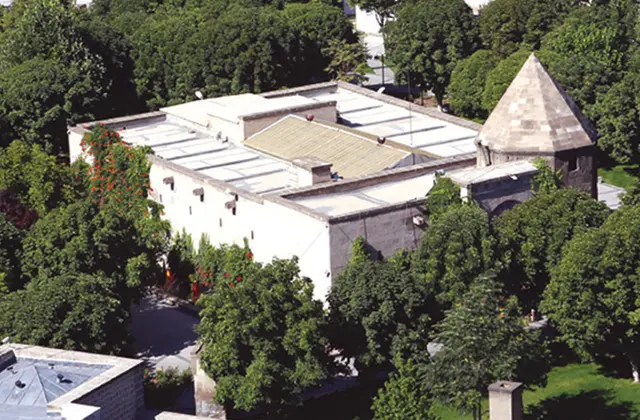
Avgunlu Madrasa and Tomb – Kıvılcım Kafe
Located in Mimar Sinan Park in central Kayseri, alongside the Gevher Nesibe Madrasa Seljuk Civilisation Museum, the Avgunlu Madrasa takes its name from a word meaning 'water source', because the groundwater, which used to be high in Kayseri, formed a spring in the lower level of the building's tomb.
Over time it was restored and enclosed, and its interior was turned into a bookshop and café. From the moment you step through the door, the Avgunlu Madrasa draws you in with its high ceilings and birdsong; you can lose yourself among the bookshelves or take a tea break upstairs.
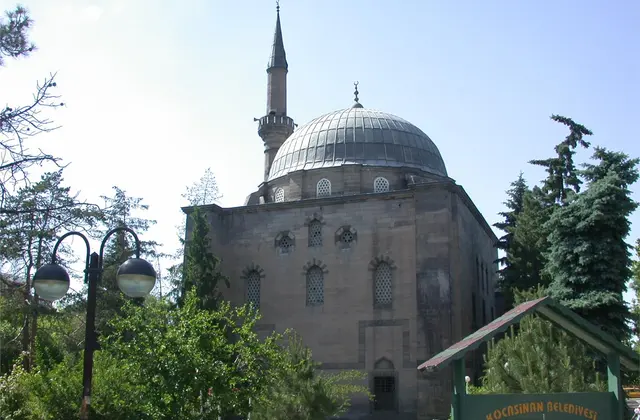
Kurşunlu Mosque
Commissioned from Mimar Sinan in the 16th century by Ahmed Paşa, then Governor of Konya, this single-minaret, porticoed building's real name is Hacı Ahmed Paşa Mosque, but because of its lead-covered dome it is popularly known as Kurşunlu Mosque (the Leaded Mosque). It stands out for its interior decoration, its minbar and the domed ablution fountain (şadırvan) in the courtyard, carried by pointed arches resting on eight columns. A work of classical Ottoman architecture, Kurşunlu Mosque, with its hand-painted designs (kalem işi) and ornamentation, is one of the most beautiful mosques in Kayseri left to us by Mimar Sinan.
While you're this close to Kayseri's main square, we'd say don't miss a stop at Kurşunlu Mosque.
Cumhuriyet Square and the Clock Tower
If you say 'I've seen Kayseri' without visiting the Clock Tower, the heart of Kayseri, you'd be mistaken. Standing in the middle of Cumhuriyet Square, accompanied by the Atatürk Statue and the historic Kayseri Castle, the Clock Tower dates back to 1906. It was built by Salih Usta on the orders of Abdülhamit II, with the support of Haydar Bey, the Mutasarrıf (district governor) of Kayseri. During the National Struggle (the Turkish War of Independence) it was used as the Kayseri branch of the Society for the Defence of the Rights of Anatolia and Rumelia. Today the tower is run by Kayseri Metropolitan Municipality as a culture and souvenir shop. Here you can find all kinds of Kayseri keepsakes, such as keyrings, magnets, figurines, postcards and mugs.
Kayseri Castle
Kayseri Castle, whose restoration took many years and left both locals and tourists very curious, opened its doors in 2019. Having seen many civilisations, from the Romans through the Byzantines, Danishmendids, Seljuks, Dulkadirids and Karamanids to the Ottomans, Kayseri Castle is ready to welcome visitors with its renewed look. When you enter the castle, a huge open space greets you. There's everything from food and drink to a place of worship, cultural sightseeing and a library. Our advice: take your time exploring the Archaeology Museum you'll find when you go down the stairs. When you go up the stairs, you'll find a row of small cafés. Sit at whichever one you like, enjoy a frothy Turkish coffee and carry on with your tour where you left off.
Grand Bazaar (Kapalı Çarşı)
Thought to have been built in the 15th century during the Ottoman period, Kayseri's Grand Bazaar is second in size only to the Grand Bazaar in Istanbul. In 1870 it was badly damaged in an unfortunate fire, but thanks to Osman Paşa it was repaired in stone and took on its present form.
A busy commercial hub, Kayseri's Grand Bazaar caters less to tourists and more to the everyday needs of locals, such as clothing, food and jewellery. After visiting Kayseri Castle, you can step through the Grand Bazaar's gate for a mini tour. Its lively atmosphere and shopkeepers are very welcoming.
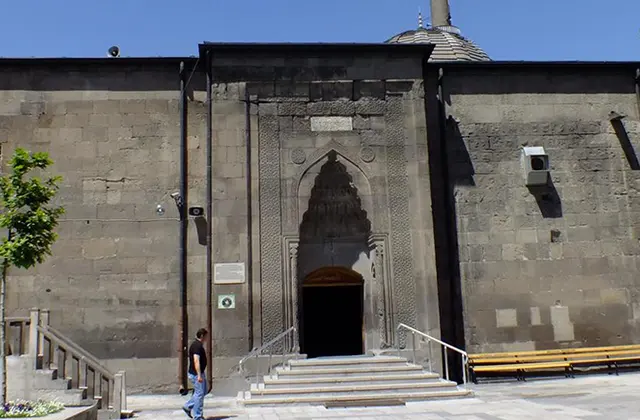
Hunat Hatun Complex
Located directly opposite Kayseri Castle, the Hunat Hatun Complex was built in 1238 by Mahperi Hatun, wife of Alaeddin Keykubat I. One of the finest examples of Seljuk architecture, the Hunat Hatun Complex consists of a madrasa, mosque, hammam, kümbet (tomb tower) and fountain. Its square courtyard is surrounded by students' rooms, which today are used by small souvenir shops and bookshops. After visiting the historic Kayseri Castle, you can cross the street to see this superb legacy of Seljuk architecture.
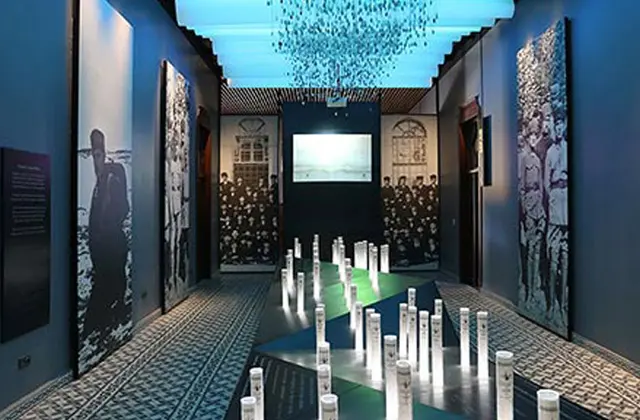
Kayseri High School National Struggle Museum
Kayseri High School: built in 1893, it sent its final-year students to the front in the War of Independence in 1921 and so had no graduates that year...
After educating generations of students, it was restored in 2016 and opened to visitors as the National Struggle Museum. In the museum you can see artefacts from the National Struggle period and the stories of its students who died heroically in the war. Admission prices are very reasonable. Notable students of the time are brought to life as wax figures, taking you back to the past. There's also a small café on your left as you enter the museum. After a stroll around the museum, it's worth stopping for a tea break to soak up the mystical atmosphere a little longer...
Kayseri Quarter (Kayseri Mahallesi)
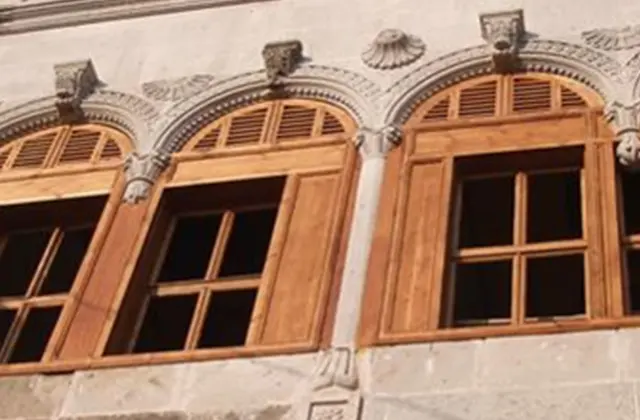
Lined with historic Kayseri houses that carry the old Kayseri culture into the present day, the Kayseri (Setönü) Quarter is full of characteristic historic houses that are fine examples of stonework; until recently they lay in ruins, but the municipality's restoration work has brought them back to life. Today it is a busy, lived-in place, just as in the old days. It's one of the places in Kayseri we'd tell you that you absolutely must see.
The mansions and houses in the quarter are now used as course centres, a conservatory, restaurants, boutique hotels and live-music venues. As soon as you follow the cobbled streets, your journey into the past begins. The historic carved doors and the square of the Kayseri Quarter are a real visual feast. If you find yourself in the Kayseri Quarter, you can sit at a café on the square for a dessert break or, if you like, enjoy a nargile (hookah).
Seyid Burhanettin Tomb
Seyid Burhanettin, teacher of Mevlana (Rumi), lived in Kayseri between 1235 and 1244. Following a dream he had, he went to Konya, found Mevlana and taught him for a year. He then returned to Kayseri and was Mevlana's teacher for 9 years. In 1894 the Governor of Ankara had a tomb built over Seyid Burhanettin's grave. The tomb, with three iwans and a central dome, has its entrance on the north side. The 1894 inscriptions written by Ali Emiri above the doorway are worth seeing.
Places in this article
Pages for the places mentioned in this article
Avgunlu Madrasa
Kayseri
Kurşunlu Mosque
Kayseri
Hunat Hatun Complex
Melikgazi, Kayseri
National Struggle Museum
Kayseri
Kayseri Houses
Kayseri