Pastırma
Cured beef
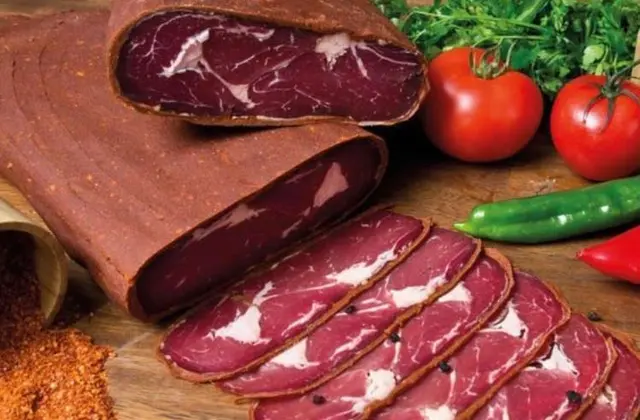
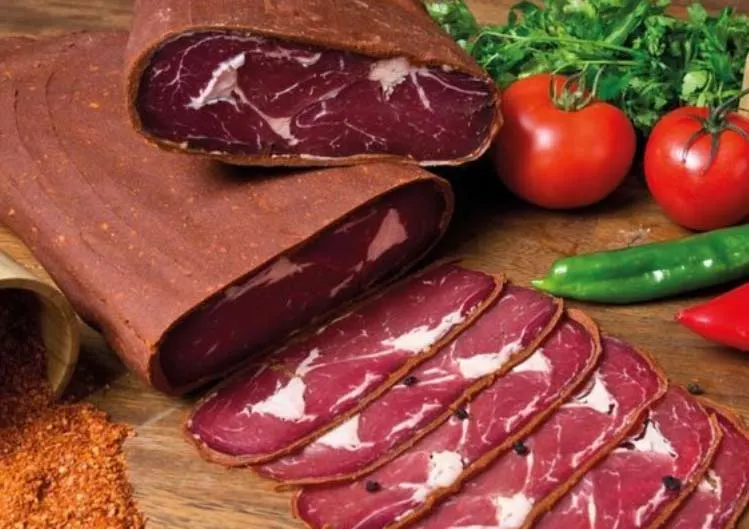
A cured, air-dried meat that comes from Kayseri's long tradition of livestock farming, and one of the city's best-known foods.
Where to eat itThe Historical Journey of Pastrami: From Central Asia to Kayseri
The origins of pastrami trace back to the nomadic lifestyle and steppe culture of the Turks in Central Asia. Notes by the 3rd-century Roman historian Ammianus describe how Hunnic warriors preserved meat by pressing it under their saddles during long horseback journeys. Meat pockets on Hunnic saddles preserved in Hungarian museums confirm this practical method of sustenance.
This ancient tradition evolved into a refined culinary art in Kayseri after the migration of Oghuz Turks to Anatolia. Derived etymologically from the process of "pressing" (bastırma) meat between two forces to drain its moisture, pastrami served as a vital staple for armies and caravans throughout history, eventually becoming an iconic delicacy praised in Evliya Çelebi's 17th-century Travelogues.
"Pastrami Summer" and the Unique Climate of Kayseri
In traditional Kayseri cuisine, autumn is known as the "meat-processing season." Cattle fed in pastures throughout the summer are slaughtered in early autumn. Expert butchers divide the meat into specialized cuts, which are salted and washed with local well water before heavy stones are placed on top. This crucial stage of draining blood and moisture is referred to as being "in the press" (denkte olma).
Once drained, the meat is left to dry in the clear, dry, and mild autumn winds of Kayseri. This period of sunny days and crisp night frosts (late October to early November) is known locally as the "Pastrami Summer" (Pastırma Yazı). The mineral-rich groundwater of the Karpuzatan region at the foot of Mount Erciyes, combined with ideal wind humidity and a signature garlic-fenugreek paste (çemen), gives Kayseri pastrami its world-renowned aroma.
Pastrami Varieties and the Art of Slicing
Kayseri pastrami is categorized into three quality grades based on the cut of meat and fat ratio:
- First Class (Premium Cuts): Sırt (loin - the most prized cut), Kuşgömü (tenderloin - exceptionally tender), Şekerpare, Dilme, Orta Kapak, and Bohça Gömü.
- Second Class: Bacak, Mehle, and Kanlıbez.
- Third Class: Orta Elek, Kenar Elek, Meme, Kavrama, and Kelle Gömü.
Master Chef's Tip: Pastrami should never be sliced thick. To allow the texture and fenugreek aroma to melt on the palate, it must be skillfully paper-thin carved using specialized pastrami knives.
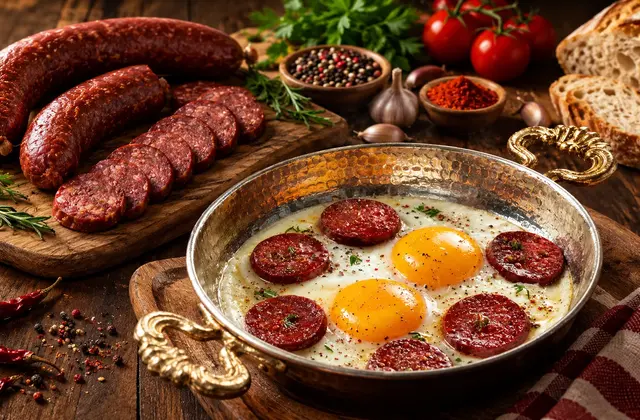
Shopping Guide: If you wish to purchase vacuum-packed gift pastrami and traditional Kayseri sujuk on your visit, check out our guide: Where to Buy Pastrami and Sujuk in Kayseri?.
Where to eat it
Places where you can find this dish
No places matched for this dish yet. Browse all restaurants. See All Restaurants →